
Residential repairs
Garage Door Repair
Garage door spring, cable, track, roller, hinge, panel, and hardware repair in the Charlotte area. Request an inspection to identify the cause of a damaged or unreliable door.
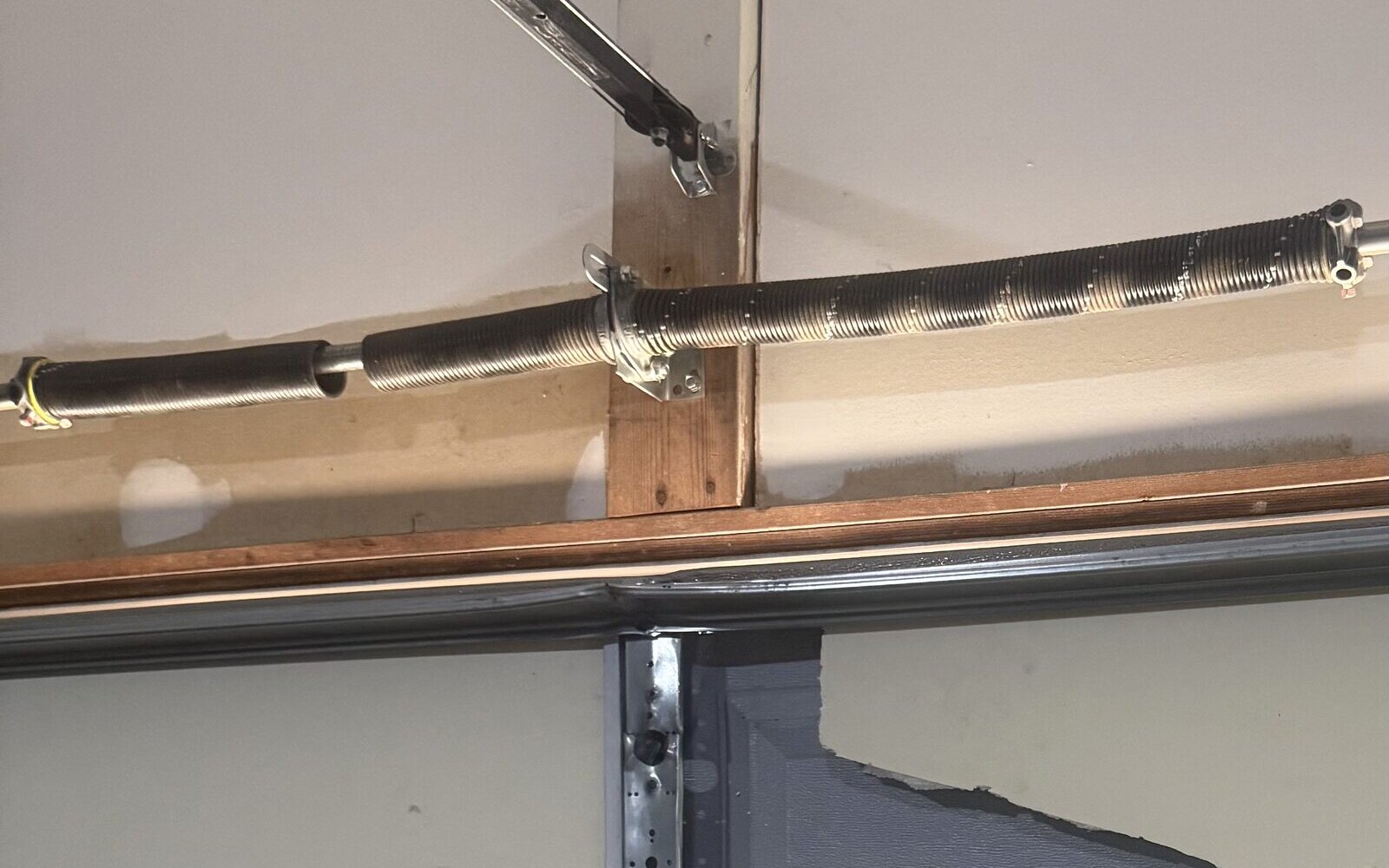
Broken springs and door balance
A loud bang, a visible gap in a torsion spring, or a door that suddenly feels heavy can indicate spring failure. Springs fatigue through repeated cycles; corrosion, incorrect sizing, and poor balance can add stress. An inspection considers door weight, dimensions, lift configuration, and the existing spring system before choosing replacements. Do not operate a door with a broken spring or attempt high-tension repairs yourself.
- Broken torsion and extension springs
- Worn or fatigued springs
- Incorrect spring sizing and tension
- Heavy doors and partial opening
- Spring-related opener strain
- Replacement spring selection and balance assessment
- Ask about high-cycle options for your door
Cables, drums, and lifting hardware
Frayed cables, slack lifting cables, or a door that rises unevenly require prompt inspection. A cable can leave its drum after a jam, poor alignment, or loss of spring tension. The springs, drums, tracks, cable routing, bottom brackets, and lifting assembly need to be checked together—not just the visible cable. Stay away from loaded cables and bottom brackets.
- Broken, frayed, loose, or disconnected lifting cables
- Cables slipping off drums
- Damaged drums and incorrect cable routing
- Uneven lifting
- Cable replacement and lifting-system inspection
Off-track, crooked, and jammed doors
Vehicle impact, a damaged roller, bent track, loose hardware, or a lifting-system fault can pull a door off track. An unstable door may fall or shift unexpectedly. Keep people clear and stop using it. A technician assesses structural damage and the lifting system before deciding whether track alignment, component replacement, or door replacement is appropriate.
- Bent vertical or horizontal tracks
- Misaligned tracks and damaged mounting brackets
- Rollers leaving tracks
- Doors jammed partly open
- Vehicle-impact damage
- Track alignment and replacement
Rollers, hinges, bearings, and hardware
Grinding, shaking, and vibration can come from worn roller bearings, damaged hinges, loose fasteners, or track misalignment. The inspection separates normal operating sound from binding or wear. Replacement parts must fit the door and track; lubrication cannot correct a cracked hinge or a failing bearing.
- Worn nylon or steel rollers
- Bent, cracked, or loose hinges
- Loose fasteners and track supports
- Bearing and shaft wear
- Vibration, grinding, and noisy travel
- Compatible roller and hardware replacement
Panels and damaged door sections
Dents, cracks, rust, bent bottom sections, and damaged insulation can affect both appearance and structural integrity. A replacement section must match the manufacturer, model, size, and joint profile. Age, discontinued parts, finish differences, and damage to multiple sections may make full replacement more practical. An inspection determines whether repair is safe and whether matching parts are available.
- Dented or cracked sections
- Rusted steel and bent bottom sections
- Vehicle-impact damage
- Damaged insulation
- Section matching and availability
- Panel repair versus full-door replacement
Seals, locks, and everyday wear
Floor gaps may come from worn weather seals, an uneven slab, alignment problems, or incorrect travel settings. Worn perimeter seals, stiff manual locks, loose handles, and damaged brackets also deserve inspection. Sealing improvements can reduce drafts but cannot solve every drainage or floor problem.
- Bottom, side, and top weather seals
- Manual locks and handles
- Loose reinforcement and mounting hardware
- Doors not meeting the floor evenly
- Weather exposure and corrosion concerns
Symptoms & inspection
What is your garage door doing?
Different faults can look alike. These are possible causes, not a diagnosis without an inspection.
Door won’t open
A broken spring, locked door, power fault, or opener problem can prevent opening.
The lifting system, manual lock, power, controls, and operator drive are inspected. Repair depends on the failed component; do not repeatedly run an opener against a heavy door.
Door won’t close
Blocked or misaligned sensors, wiring damage, an obstruction, or binding can prevent closing.
The technician checks the travel path, photo-eyes, wiring, door movement, and opener diagnostics. Sensor alignment, wiring correction, or mechanical repairs may be appropriate; sensors must not be bypassed.
Door reverses unexpectedly
Resistance, sensor interruptions, or incorrect travel behavior can trigger reversal.
Sensors, track condition, balance, and model-specific settings are evaluated. The cause must be corrected instead of increasing force to hide resistance.
Door opens a few inches and stops
Spring failure, binding, a lock, or an operator fault can cause partial opening.
Springs, cables, locks, tracks, and the operator are assessed. Stop using the door until an unstable or unbalanced system is ruled out.
Door closes and reopens
Floor contact, travel settings, resistance, or control faults can cause reopening.
The door's floor contact, seals, alignment, safety behavior, and travel are checked. Correction may involve mechanical work or model-appropriate adjustment after inspection.
Crooked or uneven door
Cable, drum, roller, track, or spring problems can upset even lifting.
The full lifting assembly and supporting tracks are inspected. Cable, hardware, or track repairs may be needed; do not try to straighten a loaded door yourself.
Noisy or grinding door
Worn bearings, rollers, hinges, loose hardware, or a damaged drive can cause noise.
The technician identifies whether sound comes from the door or opener. Compatible component replacement, alignment, or appropriate servicing may help.
Slow-moving door
Binding, imbalance, opener wear, or model-specific operation can affect speed.
Door resistance, balance, drive components, and controls are examined. A stronger opener is not a substitute for correcting a mechanical fault.
Door stuck open
Track damage, cable faults, sensor problems, or an opener failure can leave a door open.
Door stability and lifting components are assessed before movement. Do not pull the emergency release on an unstable open door; request assistance.
Door stuck closed
A broken spring, engaged lock, power loss, or drive fault can prevent access.
Springs, cables, locks, and power are checked before operator diagnosis. Do not force the door or attempt to lift it with damaged high-tension parts.
Door shakes or bounces
Worn rollers, loose hinges, bent tracks, section damage, or imbalance can cause vibration.
Hardware condition, track geometry, panels, and lifting balance are inspected. Alignment and part replacement may be necessary; lubrication alone may not resolve it.
Door does not seal at the floor
Worn seals, uneven concrete, alignment, or travel issues can leave a gap.
Floor profile, seal compatibility, movement, and closing behavior are checked. Seal replacement or alignment may help, but sealing cannot correct every slab or drainage problem.
Opener runs but door stays still
A disengaged trolley, worn gear, broken belt or chain, or lifting-system damage can stop movement.
The door is checked first, then the release, trolley, rail, and drive. A compatible drive repair or operator replacement may be considered after the cause is identified.
Common questions
How do I know if a spring is broken?
A gap in a torsion spring, a sudden loud bang, slack cables, or a door that will not lift are warning signs—not a diagnosis. Stop operating the door and arrange an inspection. Do not test its weight yourself if springs or cables may be damaged.
Can an off-track door be repaired?
Often, but not always. Track, roller, cable, and panel damage must be assessed first. Severely bent sections or compromised supports can require replacement. Do not push a crooked door back into its tracks.
Can only one panel be replaced?
Sometimes. Matching section profiles, dimensions, model availability, structural condition, and finish all matter. A new panel may not match an aged door's color exactly.
How long does a garage door spring last?
Springs are commonly specified by cycle life, not a guaranteed number of years. One opening and closing is a cycle. Daily use, corrosion, sizing, and door balance affect lifespan; an inspection can determine suitable replacement options.
What determines whether repair makes sense?
The extent of damage, safe operation, compatible part availability, and the condition of the remaining door and opener all influence the recommendation. Not every damaged door can be repaired safely.
During your service appointment
Tell us what changed, how the equipment behaves, and whether access or security is affected. We inspect the relevant components and discuss suitable repair or replacement options. Damage, compatible parts, access, and the system's condition determine the work needed. Your preferred appointment window is a request and requires confirmation.